
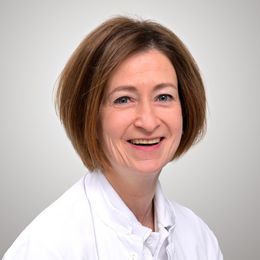
Dr. med.
Barbara Baulig
Consultant m.e.V. Anaesthesiology
Academic position
Venia legendi post-doctorate university teaching qualification awarded by the University of Zurich
Specialisation
Regional anesthesiaPain management
Intensive care
Hemodynamics
Graduate
| 2009 | Specialist in Intensive Care Medicine, FMH |
| 2008 | Diplomate of the European Society of Anaesthesiology, Brussels |
| 2008 | Specialist in anaesthesiology, FMH |
| 2008 | Swiss Society for Anaesthesiology and Reanimation (SGAR) Berne, Specialist Certificate exams in anaesthesiology and resuscitation |
| 2007 | Certificate of Advanced Cardiac Life Support, Zurich |
| 2007 | Board certification Anaesthesiology, Freiburg, Germany |
| 2007 | Certificate on the update of expertise in radiation protection for german radiation regulation RöV |
| 2007 | Swiss Society for Emergency Medicine (SGNOR), Emergency physician participation rate SGNOR (St. Gallen, Switzerland) |
| 2005 | Certificate 4th European Course on Perioperative Transoesophageal Echocardiography (EACTAECHO’05) |
| 2001 | Proof expertise on the suitability of physicians to participate in the rescue, Medical Association of Sachsen-Anhalt, Germany |
| 2000 | Certificate of qualification in radiation protection for emergency diagnosis with exception of emergency cranial CT diagnosis, District Medical Association Suedwuerttemberg, Germany. |
| 1997 | University of Ulm (Germany), Faculty of Medicine, Medical Doctor, Thesis on "Examination the expression of apoptose genes in human neuroblastoma cell-lines using molecular biological methods." |
| 1990–1997 | University of Ulm (Germany), Faculty of Medicine, Medical School |
Postgraduate
| 2008–2009 | Resident in the Department of Surgical Intensive Care (Head of Department: Prof. R. Stocker), Zurich University Hospital |
| 2003–2008 | Resident at the Institute of Anaesthetics, Zurich University Hospital (Medical Director until 2006: Prof. T. Pasch; since 2006: Prof. D. Spahn), including 6 months at Balgrist University Hospital, Zurich, 12 months cardiac anaesthesia, 6 months cardiac surgical intensive care, and 6 months at the University Children’s Hospital, Zurich |
| 2002–2003 | Scientific assistant in the Department of Anaesthesia, University Hospital, Albert Ludwig University of Freiburg: (Executive Director: Prof. K. Geiger) |
| 2001 | Scientific assistant on the surgical intensive care unit, Department of Anaesthesia and Surgical Intensive Care, Martin Luther University of Halle-Wittenberg (Medical Director: Prof. J. Radke) |
| 2000–2001 | Scientific assistant in the Department of Anaesthesia and Surgical Intensive Care, Martin Luther University of Halle-Wittenberg (Medical Director: Prof. J. Radke) |
| 1999–2000 | Scientific assistant in the Department of Thoracic and Cardiovascular Surer, University of Tübingen (Medical Director: Prof. G. Ziemer) |
| 1997–1999 | Junior house officer in the Department of Cardiac Surgery, Ulm University Hospital, Safranberg (Medical Director: Prof. A. Hannekum) |
Memberships
- 2008 Member of the Swiss Medical Association (FMH)
- 2005 Member of the Professional Association of the German Anaesthesiologists
- 2003 Member of the Swiss Association of Junior Doctors and Consultants (VSAO)
Scientific projects
- Perioperative continuous assessment of central-venous oxygen Saturation
- Continuous infusion of a local anaesthetic into the sternal wound after cardiac surgery (not yet published)
- Improved pain control with continuous infusion of a local anaesthetic after aortic vessel surgery (not yet published)
- Perioperative continuous transcutaneous carbon dioxid tension monitoring
Publications
Contact
Secretariat Anaesthesiology
+41 44 386 38 32
e-mail
Secretariat pain therapy
+41 44 386 54 15
e-mail
Office of the Head of Anaesthesiology
Claudia Gasser-Fideeler
+41 44 386 54 02
e-mail
Anesthesia
Prof Dr Urs Eichenberger and his team use the latest anesthetic techniques for patients of all ages, including children, to provide optimal conditions for smooth and pain-free surgery, as well as recovery from the operation with no complications and minimal pain. Once patients have left the operating theatre, the team continues their care in the recovery room, on the intensive care unit, on the ward, and in subsequent anesthetic and pain clinics.